
Why (and how) Should Kids Study Classics?
First, what is classics?
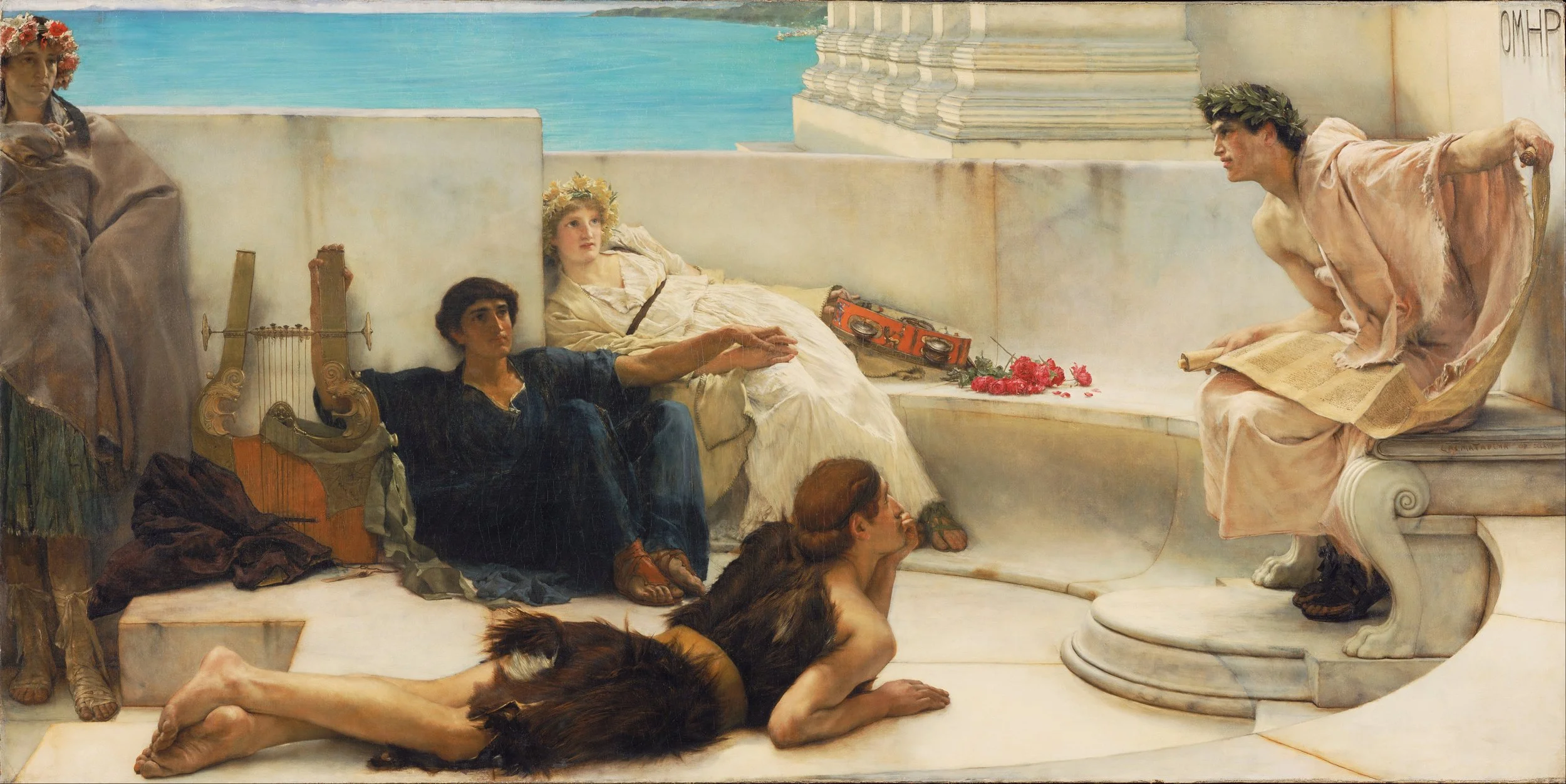
A Reading From Homer, painted by Sir Lawrence Alma-Tadema in 1885, captures with beautiful color the feeling of listening to a professor in a graduate seminar
Traditionally, classics is the branch of the humanities dedicated to studying the languages, cultures, and histories of ancient Greece and Rome. These days, those things are usually a part of a broader course of study that includes art history, archaeology, and digital humanities. In fact, classicists work on all kinds of digital projects, like the interactive dictionary Suda Online, the online interactive atlas available at the Ancient World Mapping Center, or these virtual recreations of ancient cities: https://yorescape.com/?dashboard/virtualtour/id/9492.
Still, when most people hear “classics,” they think about literature. The works of great dramatists like Aeschylus, Euripides, and Aristophanes are some prime examples, as are the epic poems of Homer and Vergil. The Iliad and the Odyssey are the basis for all kinds of later literature, down to comic books and television shows.
Cultural literacy
If classics is the study of ancient stuff, then why should we bother with it much today? Classicists hear this question a lot. I imagine that it’s a lot like math teachers being asked when algebra will be useful. To be fair, it’s a good question.
Mario and Odysseus are separated by thousands of years and their style of facial hair, but they’re both trying to get home
I think the most obvious answer is that it’s important for our cultural literacy. That is, so many of the things we see and engage with, from architecture to video games, are based on Greek and Roman thought. Video games like Hades draw directly on Greek mythology and can only really be understood with some basic knowledge of myth to draw on. Others, like Super Mario Odyssey, invoke ancient stories to set a tone before we even start to play. When we see the name Super Mario Odyssey, we know that Mario will be travelling a long way to get home to the Mushroom Kingdom, just like Odysseus spent twenty years getting home to Ithaca from the Trojan War.
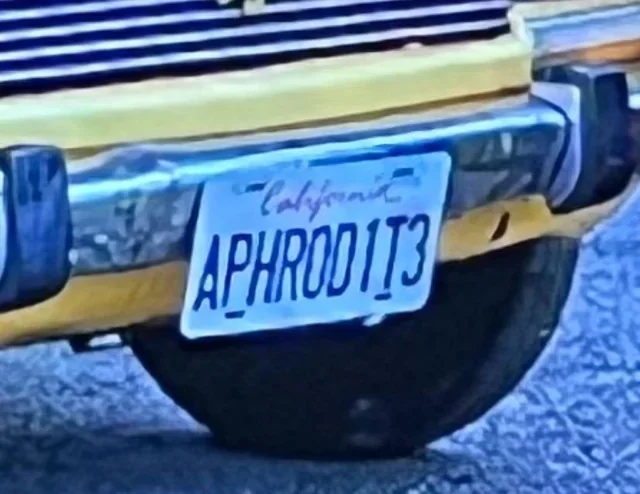
Oliver Putnam understands the importance of classical learning
Mythology is an important building block in media for adults, too. Careful observers will notice the name of Oliver Putnam’s car in Only Murders in the Building: “Aphrodite.” Oliver Putnam is the definition of a romantic, so it makes sense that his patron god would be Aphrodite, the goddess of love. Madeline Miller and other writers have also taken to adapting the ancient myths for modern adult audiences, building on them with new details and storylines. These are popular novels, and to talk about them effectively at the water cooler, you’ll need to know some classics!
Language skills and vocabulary
One of the main aspects of studying classics is studying the Greek and Latin languages. They seem difficult at first, but when you realize that they’re already a big part of the language you speak every day (true for a good portion of the world, at least) they become much easier to manage. Studying classical languages helps readers learn how to take apart words and figure out their meanings from their component parts, which is a critical part of learning how to read modern languages more effectively too. When you look at the vocabulary of specific fields of study, it becomes clear just how important it is for young students to have at least a foundation in these languages.
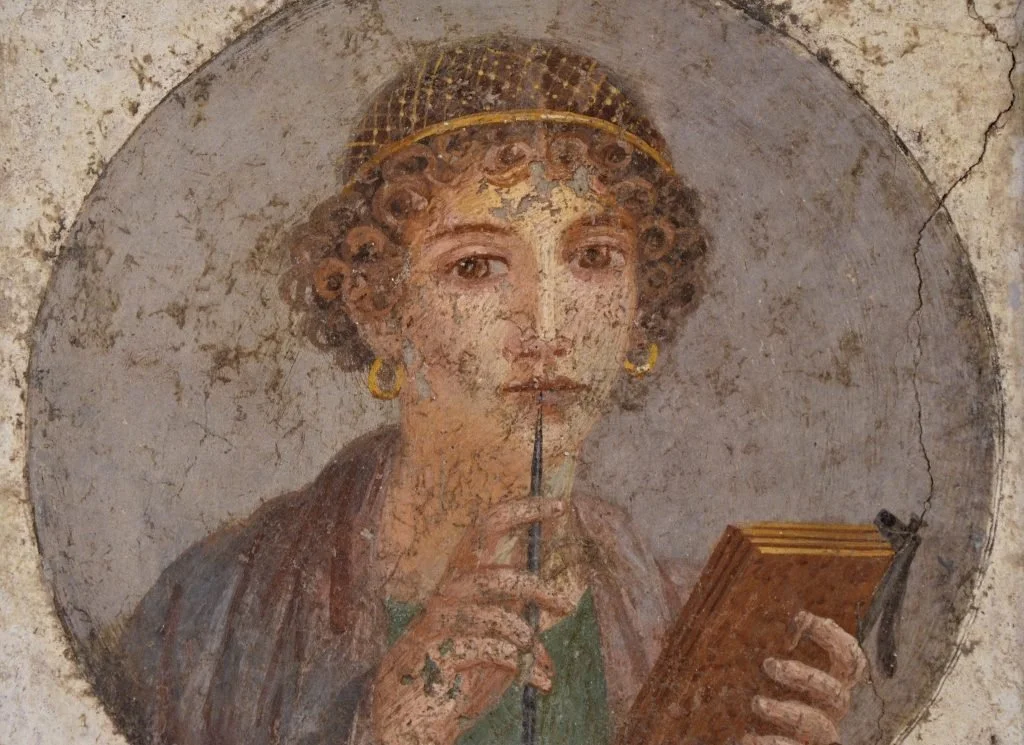
Portrait of a woman with a writing stylus, from Pompeii
For instance, the languages of science and medicine are built on Greek and Latin. Words that seem impenetrable, like erythrocyte, are easier to handle when you know that erythros is the Greek word for red, and kytos, the word for a kind of hollow jar-or a cell! An erythrocyte, then, is nothing more intimidating than a red-blood cell. And a leukocyte? A white blood cell! What about certain kinds of doctors? An ophthalmologist is a doctor who studies the ophthalmos. Here’s a hint: the cyclops only has one!
The language of the law, at least in the United States, is also built almost entirely on Latin. Terms like de jure (by law) and de facto (in practice), amicus curiae (friend of the court) come at us fast when we watch the news today, and it’s much easier to understand current events when you understand the language of politics and law.
Critical thinking and self-understanding
Perhaps most importantly of all, studying the classics helps us build critical thinking skills and a better understanding of ourselves. Ancient literature is a direct connection between us and people who lived thousands of years ago. Those people have a lot to teach us, sometimes in ways that we don’t expect. For me, the moment of connection with antiquity came when I read a passage from Homer’s epic poem the Iliad that helped me understand that, despite any amount of time and space, people are basically the same. It comes when Achilles, the greatest Greek warrior, chases Hector around the walls of Troy. Homer writes, “Just as in a dream, where we are chased but cannot escape, and likewise our pursuer never catch us, even so the one could not reach the other” (Iliad, book 22). I’m sure that most of us had an almost identical dream at some time in our lives. For all that’s different between us and the Greeks of 750 BCE, there are also many things, often difficult to define, that we have in common.
Classics is, at times, a fundamentally inward-facing study. Writers like Plato and Aristotle invite us to consider our place in society but also invite us to examine who we are and what we stand for at the most intimate level. Socrates famously said that, “The unexamined life is not worth living.” The classics also teach us to apply that same critical spirit to the people and media we interact with every day, asking questions of our sources and verifying what we read and see. It gives us the tools to analyze and research, and those are skills that remain critical even today.
So, why study classics?
1. It’s FUN! Mythology is our connection to the ancient world. It lets us understand how our ancestors saw the world by giving us a chance to see through their eyes!
2. It’s USEFUL! Greek and Latin are the foundations for the vocabulary of medical, legal, and scientific terminology. A basic understanding of Latin and Greek is like having cheat codes for science class!
3. It’s MEANINGFUL! Studying ancient literature and philosophy invites us to reflect on how we think about ourselves. Why do we do the things we do, and should we do things differently?
How do you get started with your child?
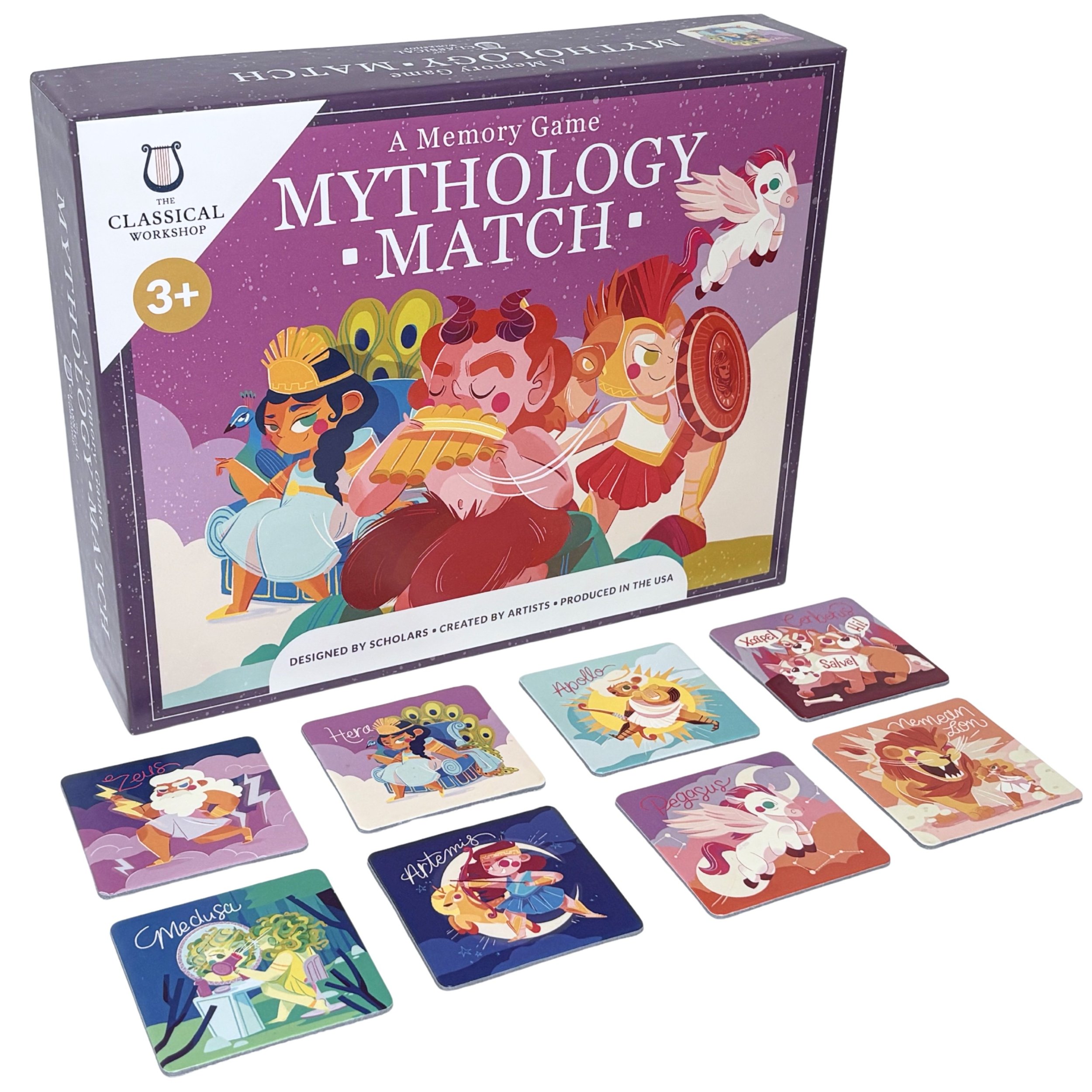
Mythology Match from The Classical Workshop introduces learners of all ages to the most important characters of Greek mythology, while also sharpening focus and concentration skills
How do you introduce your child to the classics? Play is a great way, and that’s where The Classical Workshop shines. Our products are focused on creating moments of effortless learning, where learning happens naturally as parents and children play together. You don’t need to spend any money to start-just try our printables and start a conversation about mythology with your child! Feeling rusty on your myths, and need to brush up yourself? Get a quick refresher course with the Mythopedia: https://mythopedia.com/ or at Theoi: https://www.theoi.com/.
Is your child a lego fanatic? Try introducing ancient language with Legonium, an incredible source for early Latin learning. Or maybe your child is crazy for Disney? The YouTube channel ScorpioMartianus translates Disney songs into Latin with lyrics on-screen so you can learn to sing along. Ready to get serious? The Paideia Institute offers a “Teaching Literacy with Latin” after-school course for free, and you can find one near you here: https://www.paideiainstitute.org/teaching_literacy_with_latin. There are lots of other resources available, and asking a librarian is another great way to start!
